

The Strongest Offer Isn't Always the Highest
Missy Horner
President, Empire Title Services | 20+ Years Experience
What Sellers Are Actually Looking For
Price matters — but it's not everything. From the seller's perspective, they're choosing certainty, not just a number.
A clean, well-structured offer with solid financing will routinely beat a higher offer that feels risky or complicated.

It's one of the most common misconceptions we hear from buyers: "We just need to offer more." Sometimes that's true. But at the closing table, we regularly see lower offers win — and higher offers fall apart — for reasons that had nothing to do with price.
Here's what actually makes an offer strong in Indiana and Ohio, and why the whole package matters more than any single number.
What Sellers Are Really Choosing
When a homeowner reviews offers, they aren't just looking at the price tag. They're asking one fundamental question: Will this deal actually close?
Every element of your offer communicates an answer to that question. A messy offer with excessive contingencies says "maybe." A clean, well-structured offer with verified financing says "yes." And sellers choose "yes" almost every time, even if it costs them a few thousand dollars.
The Four Pieces That Matter Most
Earnest Money
Think of earnest money as your financial handshake. It shows you're committed enough to put real money on the line — before the deal closes. A stronger earnest money deposit stands out immediately in a seller's eyes. It says you've thought this through and you're not going to walk away over something minor. In Indiana, typical earnest money runs 1–3% of the purchase price, but in competitive situations, offering above the minimum can separate your offer from a stack of similar ones.
Contingencies: Protect Yourself Strategically
Inspection, financing, appraisal — these contingencies protect you, and they exist for good reason. But an offer loaded with excessive or unusual conditions can feel risky to a seller. The goal is reasonable, standard contingencies with tight timelines. Every contingency that lingers is another opportunity for a deal to fall apart, and sellers know it. Work with your agent to understand which contingencies are essential and which ones can be structured more favorably for the seller without exposing you to undue risk.
Timeline: The Right Close Date
Closing too fast can be just as problematic as closing too slow. If you're asking for 60 days on a straightforward purchase when the seller needs to move quickly, you're already at a disadvantage. And vice versa — pushing for an unrealistically short timeline can put the whole transaction in jeopardy. Before you finalize your offer, ask your agent to find out what timeline actually works for the seller. Accommodating their schedule can be worth more than a few thousand extra dollars on the price.
Financing Strength
We touched on this in last week's post, and it bears repeating here: pre-approval (not pre-qualification) is a genuine differentiator. A seller reviewing two similar offers — one with a pre-approval letter, one without — will choose the pre-approved buyer almost every time. Your financing strength is a direct signal of how likely the deal is to actually close, and sellers weight it heavily.
What We See at the Closing Table
Lower offer wins
Cleaner terms, no unusual contingencies, solid pre-approval
Higher offer falls apart
Financing issues surface after contract — deal collapses
Deal delayed significantly
Unrealistic timeline set — lender, title, and inspections all stacked
The Real Strategy for Indiana Buyers
The best offers we see don't try to overwhelm — they try to reassure. They feel clean, clear, low-risk, and easy to say yes to. That's the goal.
Frequently Asked Questions
What makes a real estate offer strong in Indiana?
A strong Indiana real estate offer combines solid earnest money, reasonable contingencies, a realistic closing timeline, and verified financing (pre-approval, not just pre-qualification). Sellers want certainty — an offer that feels low-risk often wins over a higher-priced offer with shaky financing or excessive conditions.
How much earnest money should I offer in Indiana?
In Indiana, earnest money typically ranges from 1–3% of the purchase price, though it can vary by market and property. A stronger earnest money deposit signals commitment and seriousness. In competitive situations, offering above the minimum can help your offer stand out.
Should I waive contingencies to win a bidding war in Indiana?
Waiving contingencies can strengthen an offer, but it comes with real risk. Before waiving an inspection contingency, make sure you understand what you could be walking into. Waiving a financing contingency is only advisable if you are fully certain of your financing. Talk with your agent and lender before removing protections you may need.
Does the closing timeline matter when making an offer in Indiana?
Absolutely. If the seller has already purchased another home and needs to close quickly, an offer with a fast, realistic timeline can be very attractive — sometimes more so than a slightly higher price with a slow close. Asking what timeline works best for the seller and accommodating it can set your offer apart.
Missy Horner
President, Empire Title Services
With over 20 years of experience in Indiana and Ohio real estate closings, Missy Horner leads Empire Title Services in providing expert title insurance, property searches, and closing coordination. A trusted resource for real estate agents, lenders, and homeowners throughout Wayne, Randolph, and Henry counties.
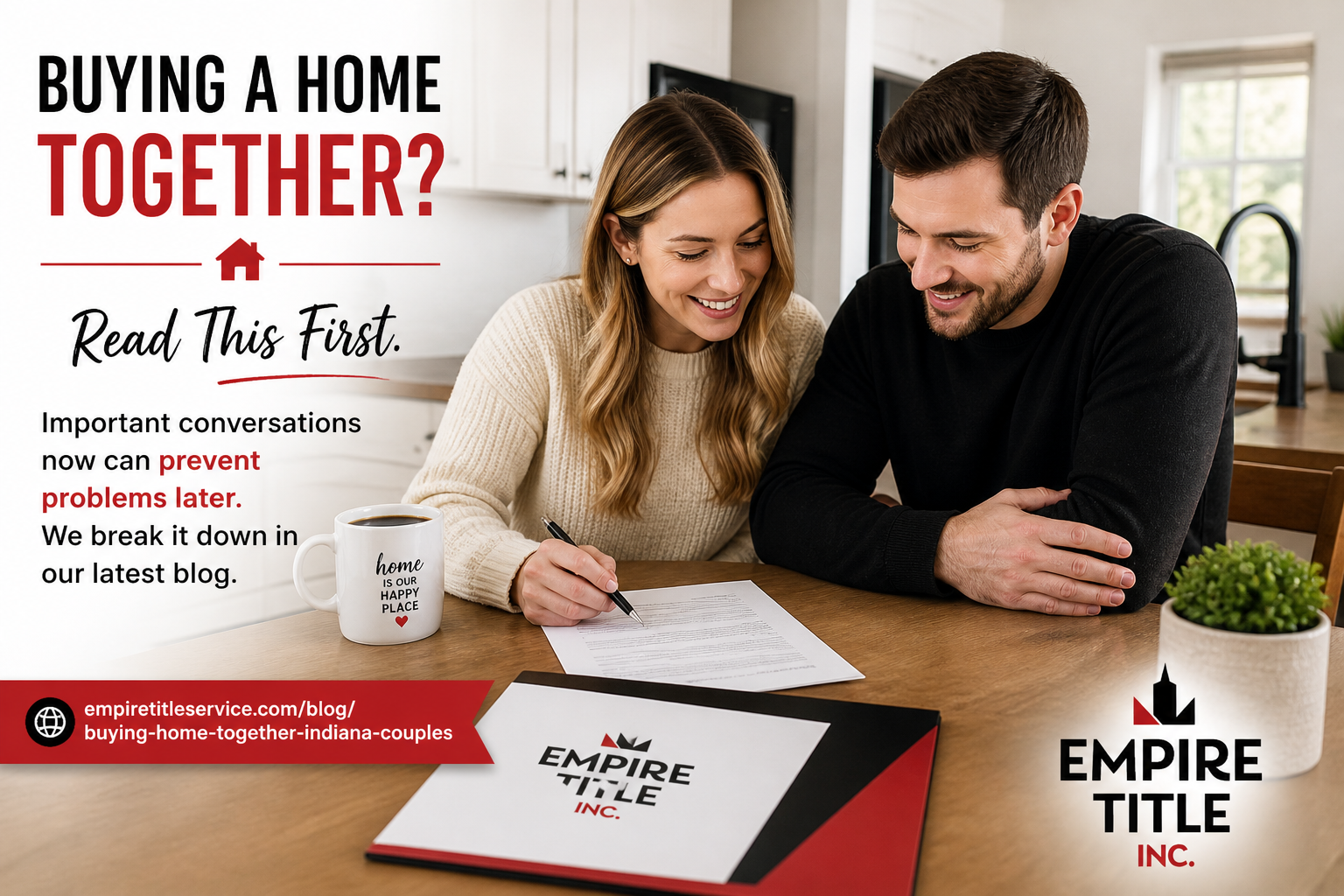
Buying a Home Together? Read This First
Picking paint colors is the fun part. Deciding how you're buying the house together? That part matters just as much. Ownership, finances, title details — it's easier to sort out now than later. The good news? It doesn't have to be complicated.