

One Address Can Include Multiple Parcels: What Buyers and Sellers Should Confirm Before Closing
Missy Horner
President, Empire Title Services | 20+ Years Experience
The short answer
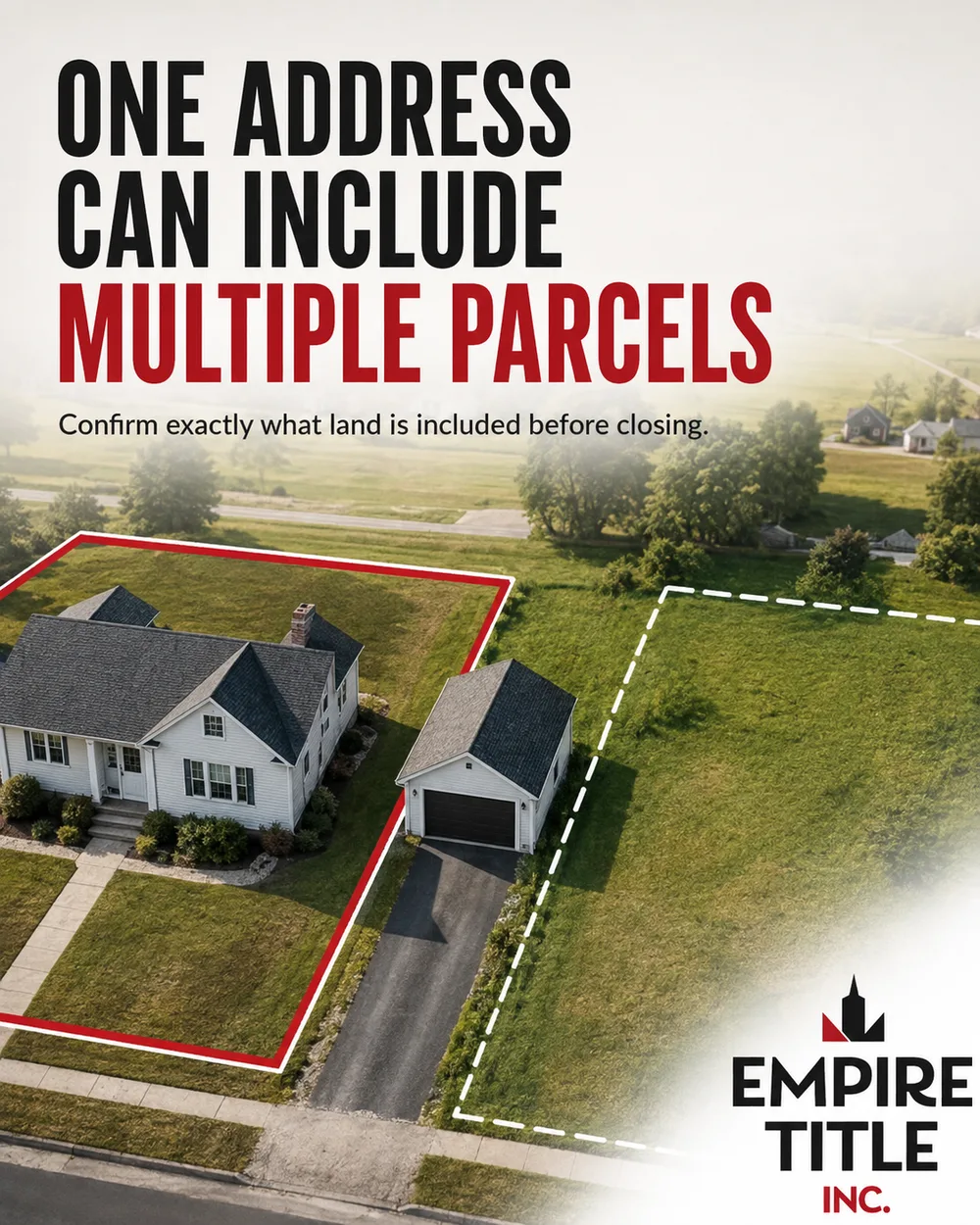
One street address can include more than one parcel. The home may sit on one parcel while a detached garage, side lot, or adjoining acreage is recorded separately. Real estate transfers according to its legal description and parcel numbers, not its street address, so confirming exactly what land is included before closing helps buyers, sellers, Realtors, and the title team avoid confusion later in the transaction.
A buyer tours a home, walks through the detached garage, looks over the side yard, and assumes everything inside the visible property lines is part of the purchase.
The seller has used the same driveway, garage, garden area, or adjoining lot for years and assumes the property will transfer exactly as it has always been used.
Then the title work begins.
The public records show that the home sits on one parcel, while the detached garage, side lot, or adjoining land is listed separately.
One street address can sometimes include more than one parcel. Understanding exactly what land is included before closing can help buyers, sellers, Realtors, and the title team avoid confusion later in the transaction.
A Street Address Does Not Always Describe the Entire Property
Most people identify a property by its street address. That works well for mail, directions, listings, and everyday conversation.
Real estate, however, is transferred according to its legal description and the parcels included in the transaction.
A street address may be connected to:
- The parcel containing the home
- A separate side lot
- A detached garage parcel
- Adjoining land
- A second buildable lot
- Rural acreage divided into multiple parcels
From the road, these areas may appear to be one property. The grass may be maintained together, the driveway may cross both parcels, and there may be no visible fence separating them.
Public records may still treat them as separate pieces of land.
Why Multiple Parcels Are Easy to Miss
Multiple-parcel properties are not always obvious from the listing photographs or a walk-through.
A detached garage may sit next to the home and appear to be part of the same parcel. A side yard may have been used by the same family for decades. A rural property may include several adjoining tracts that are described separately in the county records.
The owners may receive more than one tax statement, but buyers and Realtors may not see those documents during the early stages of the transaction.
Sometimes the purchase agreement refers only to the street address. That may not clearly identify every parcel the parties expect to transfer.
This does not automatically mean anyone made a mistake. It means the transaction needs a closer review before the deed and closing documents are prepared.
Why It Matters to Buyers
Buyers need to know exactly what land they are purchasing.
Imagine buying a home because you plan to use the detached garage, expand the yard, build a fence, or keep the adjoining lot open. Discovering after closing that part of that property was not included would create a serious and avoidable problem.
Buyers should not rely only on:
- The street address
- The apparent yard boundaries
- The location of fences
- The seller's current use of the land
- Listing photographs
- Verbal descriptions
Those details can be helpful, but they do not replace confirmation of the parcels and legal descriptions included in the transaction.
When a property appears to include additional land, buyers should ask questions early.
Why It Matters to Sellers
Sellers should also confirm what they own and what they intend to sell.
A seller may have purchased a second parcel separately many years earlier. A side lot may have been transferred through a family transaction. A detached garage may sit on land with a separate parcel number.
If the seller intends to transfer everything together, the title company needs enough information to identify and review each parcel.
Sellers can help by providing:
- Prior deeds
- Tax statements
- Parcel information
- Surveys, when available
- Information about adjoining lots or additional land
- Details about any separate purchase involving part of the property
Sharing this information early gives the title team more time to compare the contract, ownership records, legal descriptions, and closing instructions.
How Realtors Can Help Identify the Issue Early
Realtors are often in the best position to notice when the visible property may include more than one parcel.
Useful questions include:
- Is the detached garage located on the same parcel as the house?
- Does the seller receive more than one property-tax bill?
- Is the side lot included in the sale?
- Does the purchase include adjoining acreage?
- Are all parcel numbers listed in the contract or transaction information?
- Does the listing description match the land the seller intends to convey?
These questions do not require the Realtor to perform title work. They help bring the issue to the title company's attention before the final documents are prepared.
Early communication gives everyone time to confirm the transaction rather than trying to solve a parcel question days before closing.
What the Title Company Reviews
Once the file is opened, the title team reviews the ownership and public-record information connected to the property.
When multiple parcels may be involved, the review can include:
- Current ownership for each parcel
- Prior deeds and transfers
- Legal descriptions
- Recorded mortgages and liens
- Easements and restrictions
- Tax information
- Whether the same parties own every parcel
- Whether each parcel is intended to be included in the deed
One important issue is ownership.
The seller may own the house parcel individually but own the adjoining parcel with another person. A second parcel may still be held in a trust, estate, or business. A prior owner may appear in the record.
Those differences can affect who must sign and what documents may be needed before closing.
The Purchase Agreement and Deed Must Match the Intended Transaction
The parties should have a shared understanding of what is being sold.
If the transaction includes multiple parcels, the purchase agreement, title work, settlement documents, and deed should reflect the property the parties intend to transfer.
The title company cannot rely only on what the yard looks like or how the property has historically been used. The closing documents must be based on the ownership records and legal descriptions connected to the land.
When a parcel is discovered late, the team may need additional time to review ownership, update documents, obtain signatures, request lender approval, or clarify the contract.
That is why parcel questions are best handled at the beginning of the transaction.
What Buyers, Sellers, and Realtors Should Do
Before closing, confirm exactly what land is included.
Buyers should speak up when they expect the purchase to include a side lot, detached garage, adjoining land, or acreage.
Sellers should provide information about every parcel they intend to transfer.
Realtors should identify possible multiple-parcel situations when preparing the contract and opening the title file.
The title team can then review the appropriate records and prepare the transaction based on the property the parties actually agreed to buy and sell.
One Address, One Story
One address may look simple on a listing sheet. The land behind that address can tell a more detailed story.
Confirming that story early helps everyone arrive at closing with the same understanding of what is changing hands.
Frequently Asked Questions
Can one street address include more than one parcel?
Yes. A single street address can be connected to the parcel containing the home plus a separate side lot, a detached garage parcel, adjoining land, a second buildable lot, or rural acreage divided into multiple tracts. From the road these areas may look like one property, but public records may still treat them as separate pieces of land.
How do I know if a property includes multiple parcels?
Signs include receiving more than one property-tax statement, a detached garage or side yard that sits outside the apparent lot lines, and rural acreage described as several tracts in the county records. Real estate transfers according to its legal description and parcel numbers, not its street address, so the parcels listed in the contract and title work are what determine the answer.
What happens if a parcel is discovered late in the transaction?
The team may need additional time to review ownership for the newly identified parcel, update documents, obtain signatures, request lender approval, or clarify the purchase agreement. Ownership can differ between parcels, which may change who is required to sign. This is why parcel questions are best raised at the beginning of the transaction rather than days before closing.
What should sellers provide if their property includes extra land?
Sellers can help by providing prior deeds, tax statements, parcel information, surveys when available, details about adjoining lots or additional land, and information about any separate purchase involving part of the property. Sharing this early gives the title team time to compare the contract, ownership records, and legal descriptions.
Missy Horner
President, Empire Title Services
With over 20 years of experience in Indiana and Ohio real estate closings, Missy Horner leads Empire Title Services in providing expert title insurance, property searches, and closing coordination. A trusted resource for real estate agents, lenders, and homeowners throughout Wayne, Randolph, and Henry counties.