

Why Are Property Taxes Credited at Closing in Indiana?

Missy Horner
President, Empire Title Services | 20+ Years Experience
Reviewed and approved by Melissa (Missy) Horner, Owner
You receive your closing figures, start reviewing the numbers, and notice a property tax credit.
If you are buying or selling a home in Indiana, that line can be confusing. Why might the seller give the buyer a credit for property taxes? Who pays the next tax bill? Why can a tax bill from one year affect a closing taking place in another?
The explanation starts with an important feature of Indiana's property tax system: Indiana property taxes are paid in arrears.
Quick Answer: Why Might the Buyer Receive a Property Tax Credit at Closing?
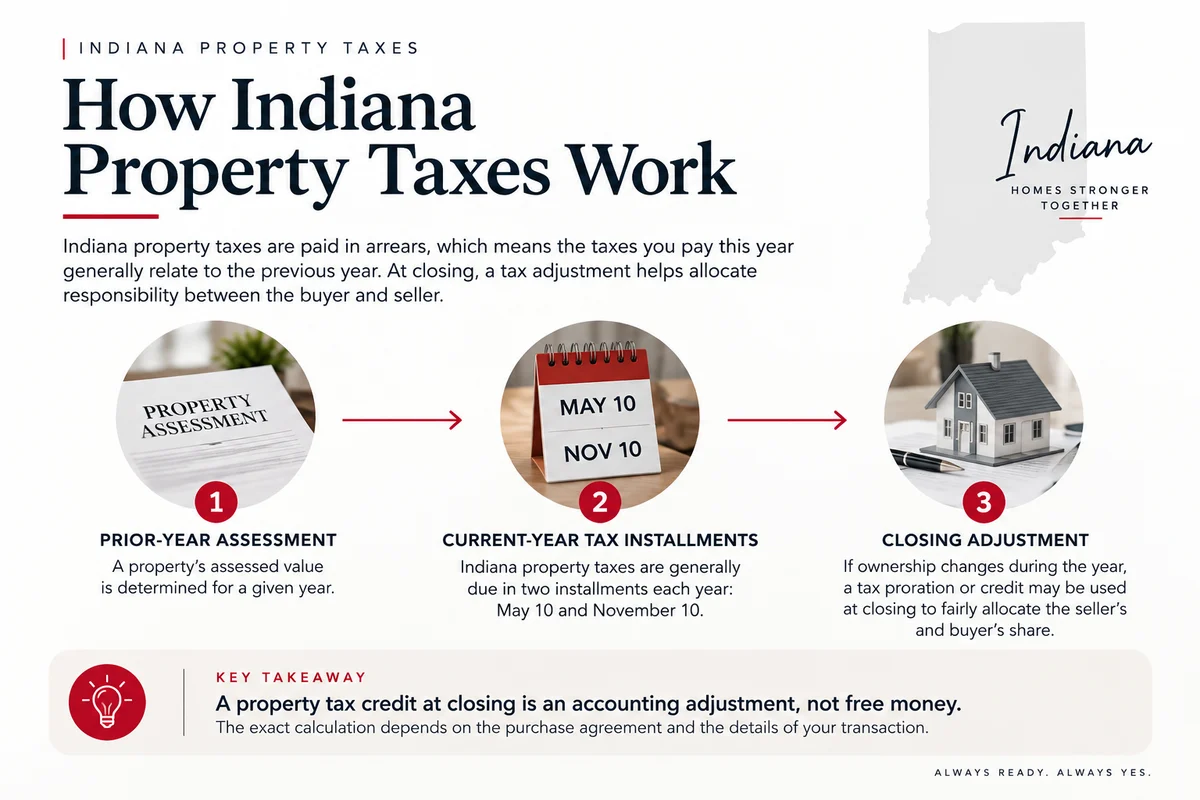
Indiana property taxes are paid in arrears, meaning taxes paid during the current year generally relate to the preceding year.
When a property changes ownership, the seller may have owned the property during a period associated with taxes that have not yet become due. Depending on the purchase agreement and the circumstances of the transaction, the closing figures may account for the seller's allocated share through a credit to the buyer.
The exact treatment and calculation can vary by transaction.
Key Takeaways
- Indiana property taxes are generally paid in arrears.
- Property tax bills are normally due in two annual installments.
- A closing credit is an accounting adjustment, not free money.
- An ordinary proration is different from delinquent property taxes.
- The exact calculation depends on the purchase agreement and transaction.
When Are Indiana Property Taxes Due?
Indiana property taxes are generally due in two installments, on May 10 and November 10, according to the Indiana Department of Local Government Finance's property tax due-date guidance .
When one of those dates falls on a weekend or legal holiday, the payment deadline may shift. Property owners should review their actual tax statement or contact the appropriate county treasurer to confirm the applicable due date.
This schedule matters at closing because home sales do not always coincide with property tax due dates. A transaction may close before or after an installment becomes due, so the parties' respective responsibilities may need to be addressed in the closing figures.
What Does “Paid in Arrears” Mean?
As explained in the DLGF property tax terms , “paid in arrears” means that property taxes paid in the current year generally represent taxes associated with the preceding year.
For example, a tax installment paid during one calendar year may be based on the property's assessed value from the prior year. Adjustments, exemptions, corrections, supplemental assessments, or other property-specific circumstances may affect an individual tax bill.
This timing can create a gap when a property changes ownership. The seller may have owned the property during a period associated with a tax bill that has not yet become due or been paid at the time of closing.
The closing figures may be used to account for that timing difference according to the purchase agreement and the information available for the transaction.
What Is Property Tax Proration?
Property tax proration is a method of allocating property taxes between the buyer and seller.
In a typical transaction:
- The seller owns the property through an agreed-upon point in the transaction.
- The buyer assumes ownership after closing.
- One or more tax bills associated with the property may not yet have become due.
Depending on the purchase agreement, closing date, available tax information, and other circumstances, the closing statement may include a credit or charge intended to allocate the parties' respective shares.
The exact calculation and treatment are transaction-specific. They should not be assumed based solely on a general online example.
Why Is a Credit Used Instead of the Seller Paying the Tax Bill?
The applicable tax bill may not yet be due, and a future tax amount may not be known at the time of closing.
Rather than delaying the transaction until every applicable tax bill becomes available, the closing figures may include an adjustment based on the purchase agreement and available information.
A credit allows the parties to account for an estimated or allocated tax responsibility as part of the transaction. It does not necessarily represent the final tax amount that will ultimately be billed by the county.
Does a Property Tax Credit Mean the Buyer Gets Free Money?
No. A property tax credit on a closing statement is generally an accounting adjustment, not a bonus or discount.
After closing, the buyer generally becomes responsible for property tax bills that become due on the property. How those bills are handled may be affected by prorations, credits, escrow arrangements, the purchase agreement, and other transaction-specific terms.
Because Indiana property taxes are paid in arrears, a bill received after closing may relate, in whole or in part, to a period before the buyer took ownership. A closing credit may help account for an amount allocated to the seller under the purchase agreement.
Buyers and sellers should review the entire closing statement and ask their closing team to explain any credit or charge they do not understand. Empire's guide to where earnest money actually goes explains another common closing adjustment buyers often have questions about.

How Are Property Tax Prorations Calculated?
The purpose of a tax proration is generally to allocate property taxes between the parties, but the calculation method can vary.
The amount may depend on:
- The terms of the purchase agreement
- The closing date and which party is allocated the day of closing
- The most recent available tax information and the property's taxing district
- Exemptions, deductions, or assessment changes
- Local practices, lender or underwriting requirements, and other transaction circumstances
When a future tax bill is not yet available, the calculation may use the most recent available tax information or another method required by the purchase agreement or transaction.
A proration may be an estimate. Unless the purchase agreement or closing documents provide otherwise, the parties should not assume that it will automatically be recalculated after a future tax bill is issued.
Your closing team can explain the figures and information used in your particular transaction before you sign.
What If the Seller Has Unpaid Property Taxes?
Unpaid or delinquent property taxes are different from an ordinary tax proration.
During the title search process, outstanding taxes, liens, and other matters affecting the property may be identified. Depending on the transaction, those matters may need to be paid, resolved, or otherwise addressed before or as part of closing. Empire's guide to what a title search shows explains how taxes, liens, judgments, ownership records, and other matters can surface during title work.
A standard proration allocates taxes between the parties according to the transaction. It does not necessarily indicate that the seller failed to pay a tax bill when it was due. Read more about the separate issue of delinquent property tax liens in Indiana.
The way delinquent taxes are handled depends on the property, title work, purchase agreement, underwriting requirements, and other transaction-specific circumstances.
What Should Buyers Look for on Their Closing Statement?
You do not need to memorize every tax formula, but you should understand the figures shown on your closing statement. Empire's Closing Disclosure guide explains where credits, charges, and other transaction figures appear.
If you see a property tax credit or charge, consider asking:
- What period does this adjustment cover?
- Is this amount a credit or a charge?
- What tax information was used, and is it an issued bill or an estimate?
- How does the purchase agreement address tax prorations?
- When is the next installment due, and will it be paid directly or through escrow?
- Is the proration considered final at closing?
These questions can help you understand how the adjustment applies to your transaction. If you are preparing for closing, review Empire's guide to common issues that can delay a real estate closing.
What Should Sellers Know?
A seller may see a property tax adjustment at closing even after paying every tax bill received before the sale. That does not necessarily mean the seller is behind. The adjustment may reflect Indiana's arrears system and an allocation made under the purchase agreement.
The adjustment can affect estimated proceeds. Sellers can use Empire's Seller Net Sheet calculator and ask their closing team how the amount was calculated and whether it will be considered final.
Does This Work the Same Way in Richmond, New Castle, and Winchester?
Indiana's general property tax system applies throughout the state, but property taxes are administered locally. Actual tax amounts, taxing districts, payment records, assessments, deductions, and property-specific information can vary.

For clients near Richmond and Wayne County, New Castle and Henry County, and Winchester and Randolph County, Empire Title uses the information applicable to the property and transaction.
Local information and the purchase agreement can affect the closing figures. A general example should not be used to predict the exact credit or charge in a particular transaction.
The Bottom Line
If you see a property tax credit on an Indiana closing statement, it does not necessarily mean something is wrong.
Indiana property taxes are paid in arrears and are generally due in two installments each year. Because the timing of a sale may not align with the tax billing schedule, the closing figures may include an adjustment allocating property taxes between the buyer and seller.
The amount and method depend on the purchase agreement, closing date, available tax information, and other transaction-specific circumstances.
At Empire Title Service, we believe closing should make sense before you sign.
Frequently Asked Questions
Are Indiana property taxes paid in arrears?
Yes. Indiana property taxes paid during the current year generally represent taxes associated with the preceding year. Property-specific adjustments, exemptions, corrections, or other circumstances may affect an individual tax bill.
When are Indiana property taxes due?
Indiana property taxes are generally due in two installments, on May 10 and November 10. When a due date falls on a weekend or legal holiday, the deadline may shift. Review the actual tax statement or contact the county treasurer to confirm the applicable date.
Why might a seller credit a buyer for property taxes?
A seller may have owned the property during a period associated with taxes that have not yet become due. Depending on the purchase agreement and transaction, the closing figures may allocate the seller's share through a credit to the buyer.
Does a property tax credit mean the seller is delinquent?
Not necessarily. A normal property tax proration allocates taxes between the parties and is different from unpaid or delinquent property taxes. A seller may be current on every bill received and still have a tax adjustment at closing.
Who handles property tax bills after closing?
After closing, the buyer generally becomes responsible for property tax bills that become due on the property. The buyer may pay directly, or a mortgage servicer may pay through an escrow account, depending on the transaction.
Is an Indiana property tax proration final at closing?
It depends on the purchase agreement and closing documents. A proration may use the most recent available information and may be an estimate. The parties should not assume it will be recalculated after a future bill is issued unless their documents provide for that.
This content is for general educational purposes only and is not legal, tax, financial, or underwriting advice. Closing requirements can vary by transaction, lender, property type, and location. Contact Empire Title Service or the appropriate professional for guidance on your specific situation.
Missy Horner
President, Empire Title Services
With over 20 years of experience in Indiana and Ohio real estate closings, Missy Horner leads Empire Title Services in providing expert title insurance, property searches, and closing coordination. A trusted resource for real estate agents, lenders, and homeowners throughout Wayne, Randolph, and Henry counties.